
Can Dogs Eat Bananas? Yes, in Moderation (Plus: How to Serve It Safely)
Bananas can be a safe, simple dog treat when fed in moderation. Stick to small pieces of plain banana flesh only, avoid the peel, and stop if you notice vomiting, diarrhoea, or constipation afterward, especially in dogs with sensitive stomachs or on medical diets.
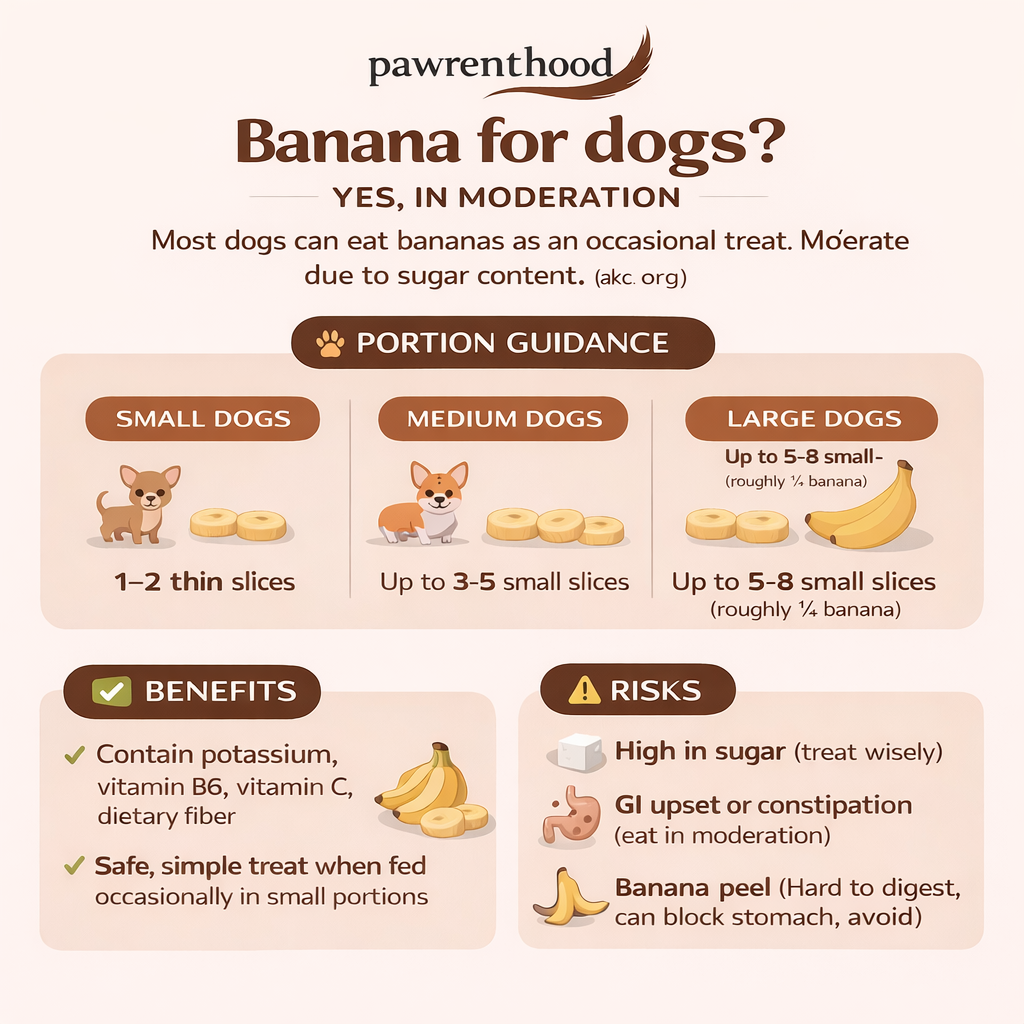
Yes. Most dogs can eat banana as an occasional treat. The key word is moderation because bananas are relatively high in sugar, and too much can lead to stomach upset. (For a broader look at which human foods are safe, see our guide on safe human foods for dogs.) Also, avoid the peel. It is not considered toxic, but it is hard to digest and can cause gastrointestinal issues or even a blockage risk if swallowed. (akc.org)
Quick answer
Yes, in moderation. Feed only the banana flesh, cut into small pieces. Do not feed the peel. Keep it treat-only and stop if you notice diarrhoea, vomiting, or constipation after feeding. (akc.org)
Banana for dogs: 7 safety rules
- Treat-only. Bananas are sweet and should not become a daily staple. (akc.org)
- Start small to test tolerance, especially if it is your dog’s first time.
- Peel the banana. Do not feed the peel. The peel can be difficult to digest and may cause GI problems. (akc.org)
- Cut into small pieces, especially for small dogs and fast eaters.
- Avoid banana products like banana bread, chips, muffins, desserts, puddings, or anything sweetened or baked. These usually add sugar and fat and may include unsafe ingredients. (And remember: some fruits like grapes are outright toxic — always check before sharing.)
- Stop if vomiting, diarrhoea, or constipation occurs after feeding, and monitor.
- If your dog is on a medical diet or has weight issues, ask your vet before adding fruit treats regularly. Our dog nutrition basics guide can help you understand how treats fit into a balanced diet.
Benefits
Bananas contain potassium, vitamin B6, vitamin C, and dietary fiber, and they are usually low in fat and salt. Practically, the benefit is not “superfood.” It is that bananas are a generally safe, simple treat option when fed in small amounts. The downside of overdoing it is usually more relevant than the upside
Risks and who should limit bananas
1) High sugar (treat budget matters)
Bananas are sweet. For dogs who need weight control or who are prone to weight gain, treat calories add up quickly. For dogs with diabetes concerns or on vet-prescribed diets, routine fruit treats can be the wrong trade-off.
2) Sensitive stomachs (GI upset or constipation)
Too much banana can cause diarrhoea in some dogs. For others, the fiber content can contribute to constipation if fed too often or in large amounts. If your dog’s stools change after banana, the solution is usually to reduce portion size or stop. (akc.org)
3) Peel problems (not toxic, but not worth it)
AKC notes banana peels are not toxic, but they can be hard to digest and may cause gastrointestinal upset. If swallowed in a larger piece, they can also become a mechanical problem. Best practice is to avoid peel entirely. (akc.org)
Can dogs eat banana peel?
Best practice: avoid it. Banana peel is not typically described as toxic, but it is difficult to digest and can cause vomiting or other GI issues. If your dog stole a peel and is now gagging, vomiting repeatedly, or cannot keep food down, contact a vet. (akc.org)
Fresh vs frozen banana
Both can be fine if it is plain banana.
- Fresh banana: easiest for portion control
- Frozen banana: can be a fun texture, but some dogs gulp frozen treats; serve small pieces and supervise
- Avoid frozen banana coated in sugar, dipped in chocolate, or blended into sweetened desserts.
Portion guidance
Use a simple rule: small treat portions.
- Start with a small piece or two.
- Watch your dog’s stool over the next day.
- If stools loosen or constipation happens, reduce portion size or stop.
- A banana that is “fine” once can still cause stomach upset if it becomes frequent.
Here’s a simple starting guide for healthy adult dogs:
- Toy / small dogs (up to ~5–7 kg): Start with 1–2 thin slices (about 0.5–1 cm thick in total) once or twice a week.
- Medium dogs (~8–18 kg): Up to 3–5 small slices as an occasional treat.
- Large dogs (18 kg and above): Up to 5–8 small slices, or roughly ¼ of a medium banana, occasionally.
When to see a vet
Contact a vet if your dog has:
- Persistent vomiting or diarrhoea
- Lethargy or refusal to eat after new food (see our overview of common dog health issues in Singapore)
- Suspected peel ingestion plus repeated vomiting, inability to keep water down, or no stool (concern for obstruction)