
Can Dogs Eat Blueberries? (Yes. Safe Portions, Prep, and Risks)
Blueberries can be a safe, bite-sized dog treat when fed in moderation. Serve them plain (fresh or frozen), start with a small amount, watch for choking in small or fast-eating dogs, and stop if you notice vomiting or diarrhoea after feeding.
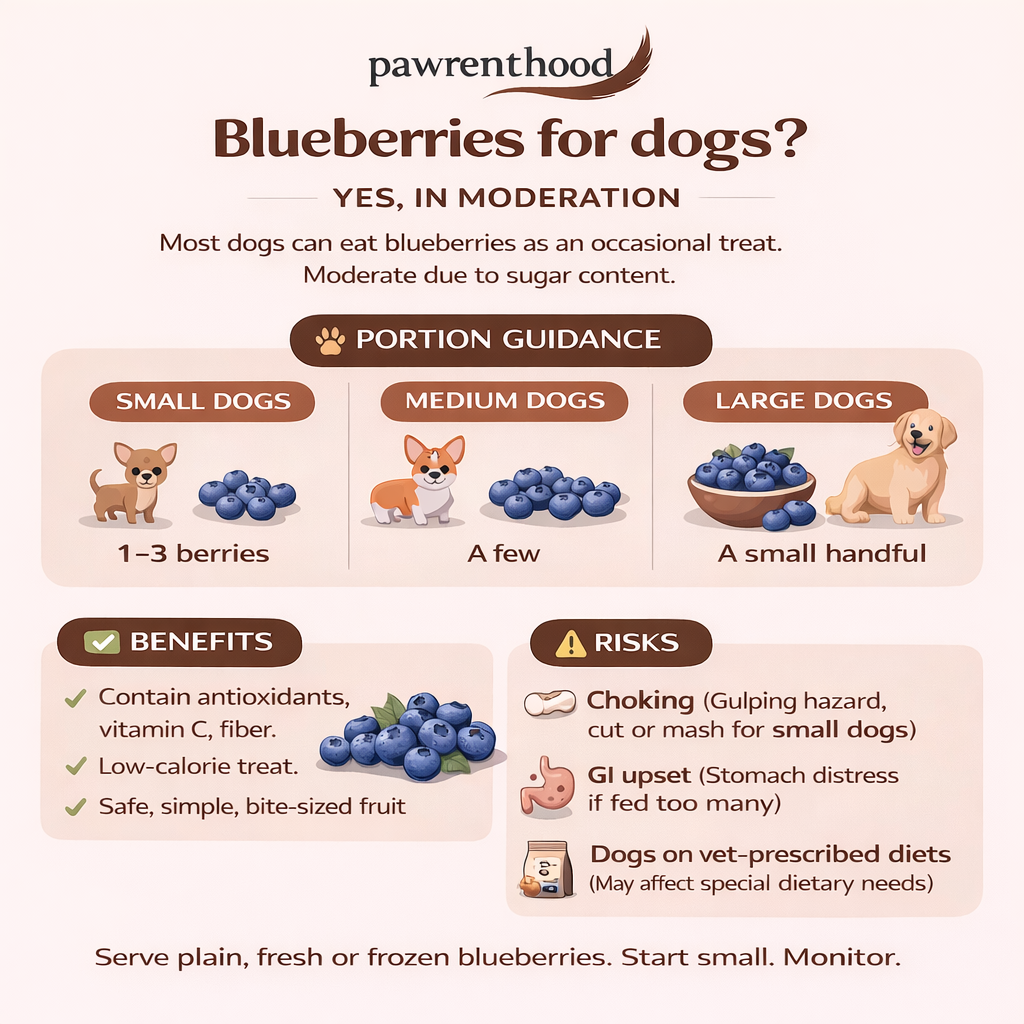
Yes. Most dogs can eat blueberries as an occasional treat. They can be served fresh or frozen, but moderation matters. (Wondering what other human foods are safe? Check our full guide on safe human foods for dogs.) The two main watch-outs are choking risk (especially for small dogs or fast eaters) and stomach upset if your dog eats too many. (petmd.com)
TLDR;
Yes, in moderation. Blueberries are generally safe for dogs and can be offered fresh or frozen, as long as they are plain and unsweetened. Start small, feed treat-sized portions, and stop if you notice vomiting or diarrhoea. (akc.org)
Blueberries for dogs: 6 safety rules
- Serve plain, unsweetened blueberries only (fresh or frozen).
- Start with a small amount to check tolerance.
- Feed in moderation. Treat, not a meal component.
- Reduce choking risk for small dogs: offer one at a time, cut in half, or lightly mash.
- Avoid blueberry products (muffins, jam, syrup, sweetened yogurt mixes). These are usually high sugar/fat and can include risky ingredients. (petmd.com)
- Stop and monitor if vomiting or diarrhoea occurs. If it repeats or worsens, call a vet.
Benefits
Blueberries are commonly described as a low-fuss treat option compared with many commercial snacks, and they contain nutrients and fiber. The realistic benefit for most dogs is simple: they are a generally safe, bite-sized treat when fed in small amounts.
If your goal is "health," the bigger lever is still your dog's balanced main diet — our dog nutrition basics guide covers what that looks like. Blueberries are best treated as a "nice extra," not a supplement plan.
Risks and who should limit
1) Small dogs and fast eaters (choking risk)
Blueberries are small, round, and easy to gulp. For tiny dogs, senior dogs who swallow quickly, or any dog that inhales treats, choking is the risk to manage. PetMD flags choking risk as a concern, especially for smaller dogs. (petmd.com)
How to reduce risk
- Offer one berry at a time
- Cut in half for small dogs
- Lightly mash and mix into a small portion of their food
- Avoid tossing handfuls on the floor for “sniff games” if your dog scarfs food
2) Sensitive stomachs (GI upset if overfed)
Even “safe fruit” can trigger diarrhoea if your dog eats too much. Blueberries contain fiber and fruit sugars, and overfeeding can cause stomach upset. (petmd.com)
Signs it was too much
- Loose stools within the same day
- Gassiness
- Reduced appetite for their next meal
3) Dogs on medical diets or with chronic conditions
If your dog is on a prescribed diet (weight control, digestive care, allergy trials, kidney support), treat additions can interfere with the plan. Best practice is to check with your vet before adding new treats regularly.
Fresh vs frozen blueberries
Both fresh and frozen blueberries can be acceptable for dogs, as long as they are plain and unsweetened. AKC and PetMD both describe blueberries as a dog-safe fruit treat, and frozen berries are often used as a cool snack.
What to watch for with frozen blueberries
- Some dogs gulp frozen treats. Serve one at a time or mash.
- Do not use frozen blueberries coated in sugar or included in dessert mixes.
Portion guidance
The goal is to keep blueberries as a treat-sized add-on. A practical approach:
- Small dogs: 1 to 3 berries to start, then adjust based on stools
- Medium dogs: a few berries as a treat
- Large dogs: a small handful can still be “too much” if given often
If your dog gets loose stools, the answer is usually not “blueberries are bad.” It is “that portion was too big for your dog.”
What to avoid (blueberry products)
Plain blueberries are the safe option. Many blueberry-flavoured human foods are not.
Avoid:
- Blueberry muffins, cakes, pies
- Jam and syrup
- Sweetened yogurt mixes
- Dried blueberries with added sugar
These products are often high in sugar and fat and may contain ingredients you do not want in your dog’s treat routine. (petmd.com)
When to see a vet
Call a vet urgently if you see:
- Repeated vomiting or vomiting that does not settle
- Repeated diarrhoea or diarrhoea with lethargy
- Signs of choking: persistent gagging, distress, breathing difficulty
- Allergic-type reactions: facial swelling, hives, sudden intense itch after a new food
For a broader look at warning signs, read our guide on common dog health issues in Singapore.
For milder tummy upset after a new treat, stop blueberries and monitor. If symptoms persist or worsen, seek veterinary advice.