
Can Dogs Eat Cucumbers? Yes, in Moderation (Plus: How to Serve Them Safely)
Cucumbers can be a safe, crunchy, low-calorie dog treat when fed in moderation. Serve plain, fresh pieces only, cut small to reduce choking risk, and avoid pickles or seasoned cucumber dishes. Stop and monitor if vomiting or diarrhoea occurs after feeding.
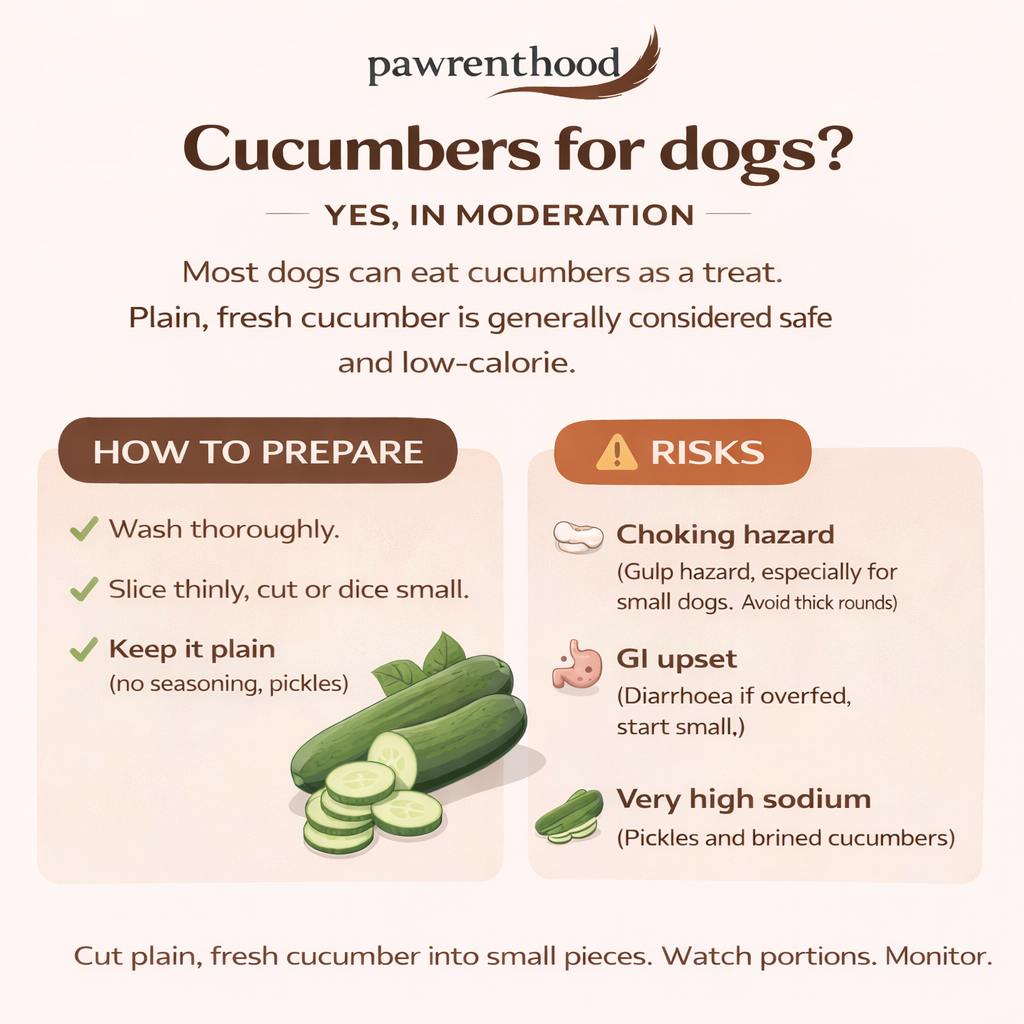
Yes. Most dogs can eat cucumbers as a treat. Plain, fresh cucumber is generally considered safe and is often described as a low-calorie snack option. (For a complete rundown of which human foods are dog-safe, see our guide on safe human foods for dogs.) The two big watch-outs are size (large chunks can be a choking or blockage risk, especially for small dogs) and cucumber products like pickles, which are typically high in sodium.
TLDR;
Yes, in moderation. Feed plain, fresh cucumber, washed and cut into small pieces. Start with a small amount, and avoid pickles or seasoned cucumber dishes. (akc.org)
Cucumbers for dogs: 7 safety rules
- Serve plain, fresh cucumber only (no seasoning, no sauces).
- Wash before feeding to remove residue.
- Slice thin and cut into small pieces, especially for small dogs and fast eaters (reduces choking risk).
- Start with a small amount and monitor for vomiting or diarrhoea.
- Treat-only. Even low-cal treats should stay as occasional add-ons.
- Avoid pickles and brined cucumbers. They are usually very high in sodium.
- Avoid cucumber salads with onion or garlic dressings, spicy seasoning, or sweet sauces. Human-prepared sides often add ingredients that do not belong in dog treats.
Why cucumbers are a popular treat
Cucumbers are popular because they are:
- Crunchy (many dogs enjoy the texture).
- Often framed as low-calorie compared with many commercial treats.
- High in water, which can feel like a refreshing snack.
The practical takeaway: cucumber can be a useful shareable snack when you keep it plain and portioned. To understand how treats fit into your dog's overall diet, check out our dog nutrition basics guide.
Risks and who should limit cucumbers
1) Choking and blockage risk (mostly a size problem)
The most important safety rule is cut it small. Large pieces can be gulped, and a swallowed chunk can become a mechanical problem. This is a bigger risk for small dogs, fast eaters, and dogs that do not chew treats well.
If your dog tends to inhale snacks, skip thick rounds and use thin slices or small diced pieces.
2) GI upset if overfed
Even safe foods can cause diarrhoea if your dog eats too much at once. If your dog vomits or gets loose stools after cucumber, the usual explanation is portion size or sensitivity. Stop, let the gut settle, then retry later only in a smaller amount.
3) Pickles and seasoned cucumbers
Pickles are not cucumber, but better. They are typically high in sodium, and some pickle or brine recipes include other ingredients that are not appropriate for dogs. AKC specifically cautions against pickles due to salt. (akc.org)
Can dogs eat raw cucumbers?
Yes. Raw cucumber is fine for most dogs when it is plain, washed, and cut into small pieces. Cooking is not necessary.
Can dogs eat cucumber skin and seeds?
For most dogs, cucumber skin and seeds are not the headline risk. The safer way to think about it:
- Wash thoroughly.
- Cut small.
- Monitor tolerance.
Some dogs with sensitive stomachs do better with peeled cucumber, but the main safety lever remains portion size and avoiding seasoning.
Can puppies eat cucumbers?
Usually yes, in tiny amounts and cut very small. Puppies have smaller stomachs and are more likely to get diarrhoea from too much new food, so start minimal and monitor stools. If you're navigating life with a young pup, our first week with a puppy guide is a helpful starting point.
Can dogs eat pickles?
Best practice: avoid pickles. They are typically very high in sodium, and the brine can include other ingredients and spices that are not suitable for dogs. If you want a cucumber treat, stick to plain fresh cucumber.
When to see a vet
Contact a vet if your dog has:
- Repeated vomiting or diarrhoea.
- Lethargy or refusal to eat after eating cucumber. (Our guide to common dog health issues in Singapore covers more warning signs to watch for.)
- Signs of choking: gagging, distress, breathing difficulty.
- You suspect your dog swallowed a large piece and now cannot keep food down or seems uncomfortable (concern for obstruction).