
Can Dogs Eat Grapes? No - What To Do If They Eat Grapes or Raisins
Grapes and raisins are never safe for dogs. Any amount can be serious because they’re linked to acute kidney injury and there is no reliable “safe dose.” If your dog eats any, even one grape, remove access and call a vet urgently without waiting for symptoms.
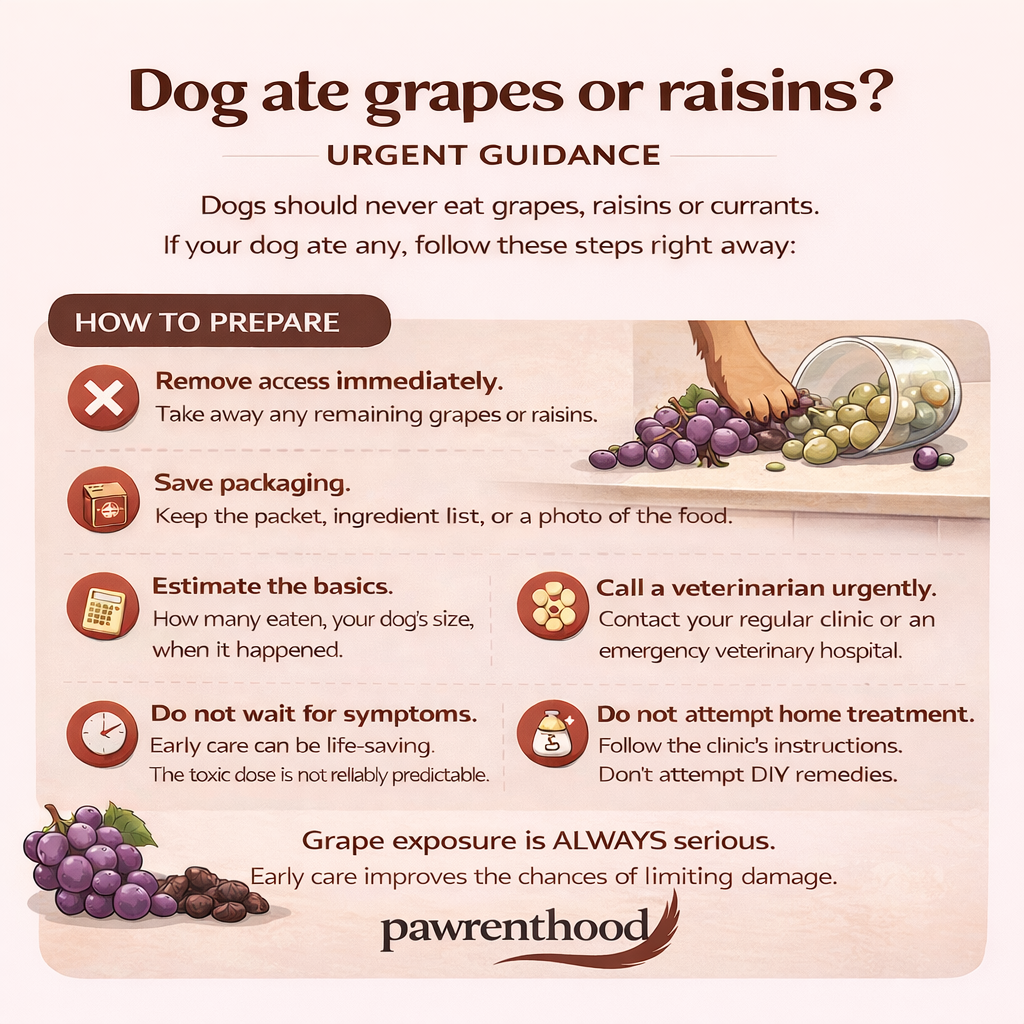
No! Dogs should never eat grapes or raisins. Any ingestion should be treated as urgent because grape and raisin toxicity can cause acute kidney injury, and there is no predictable "safe amount." (For a full breakdown of what's safe and what's not, see our guide on human foods dogs can and can't eat.)
If you are reading this with a worried stomach and a dog who looks completely fine, that is common. The problem is that some dogs show no early signs, and kidney damage can still develop.
This guide explains what makes grapes risky, what symptoms to watch for, and the safest next step.
Quick answer
No, never. Grapes, raisins, sultanas, and some currant-type dried grape products have been linked to acute kidney injury in dogs, and the amount that triggers toxicity is unknown and unpredictable, so any ingestion is serious.
Why grapes and raisins are dangerous
Grape and raisin toxicity is scary for one reason: two dogs can eat similar amounts and have completely different outcomes. That variability is a big part of why veterinarians treat grape exposure as urgent. Cornell notes the toxic amount is unknown and that any ingestion should be considered serious because you cannot predict which dog will be affected.
What happens in the body
The main medical concern is acute kidney injury, which can progress to reduced urine production and, in severe cases, kidney failure.
What is the toxic component?
The exact mechanism has been debated for years. More recent evidence points to tartaric acid (and related salts) as a likely or proposed toxic principle, but the evidence base is still evolving, so it is best framed as “likely” rather than “proven in every case.”
Are raisins as dangerous as grapes?
Yes. Raisins are dried grapes, which can mean more concentrated exposure per piece. Clinical reports and veterinary references group grapes and raisins together for the same kidney-injury risk.
Symptoms and timeline (what you may notice)
Some dogs show gastrointestinal signs first, while others look normal early on. Cornell lists signs often appearing within 6 to 24 hours, and veterinary references describe vomiting and diarrhoea as common early signs.
Early signs (often within hours)
Watch for:
- Vomiting (often the most common early sign)
- Diarrhoea
- Reduced appetite
- Lethargy
- Abdominal discomfort
Concerning progression signs (kidney involvement)
As kidney injury develops, signs can shift to:
- Increased thirst and changes in urination
- Weakness, worsening lethargy
- Reduced urine output, or inability to urinate in severe cases
How fast can it become serious?
Progression to severe kidney issues can occur within 24 to 72 hours, and kidney failure can develop within 1 to 3 days in reported cases.
What to do if your dog ate grapes
If you suspect your dog ate grapes, raisins, or foods containing them, use this 6-step plan.
- Remove access immediately. Take away remaining grapes or raisin-containing foods and keep other pets away too.
- Save the packaging. Keep the packet, ingredient list, or a photo of the food.
- Estimate the basics. Roughly how many were eaten, your dog’s size, and when it happened (even if it’s a guess).
- Call a veterinarian urgently. Contact your regular clinic or an emergency veterinary hospital. Cornell advises calling immediately because early action improves the chance of preventing or minimising kidney damage.
- Do not wait for symptoms. Waiting can waste the window where early care is most effective.
- Do not attempt home treatment unless your vet instructs it. Follow the clinic’s instructions and bring your dog in for assessment if advised.
What the vet may do
What happens next depends on how recently ingestion occurred, whether symptoms have started, and your dog’s overall risk profile. There is no specific antidote, so veterinary care focuses on limiting absorption (when appropriate) and supporting kidney function.
A clinic may:
- Take a history of what was eaten and when
- Perform blood and urine tests to evaluate kidney function
- Recommend repeat testing over the next couple of days because early results can look normal, then worsen later
Outcomes vary. The most defensible message is this: the earlier care starts, the better the odds. A regular annual vet check-up also helps catch kidney or organ issues before they become emergencies.
Common “but what if…” questions pawrents ask
“My dog ate grapes before and nothing happened”
That can happen. Variability is a known feature of grape toxicity. It does not make future exposures safe because sensitivity differs between dogs and even between exposures.
“My dog seems fine right now”
Also common. Some dogs do not show early clinical signs, and kidney injury can develop later. This is why veterinary sources emphasise not waiting for symptoms.
“It was just one grape”
Because the toxic dose is not reliably predictable, Cornell and many medical sources states any ingestion should be treated as potentially toxic. Looking for safer snack options instead? Blueberries and bananas are much safer fruit choices in moderation.
Prevention: where grapes and raisins hide
Most accidental exposures happen when grapes are not "obviously grapes." Keeping a watchful eye on what your dog eats is part of everyday pawrenting — our guide to common dog health issues in Singapore covers other risks worth knowing.