
Can Dogs Eat Human Food? Safe Fruits, Snacks, and Foods to Avoid
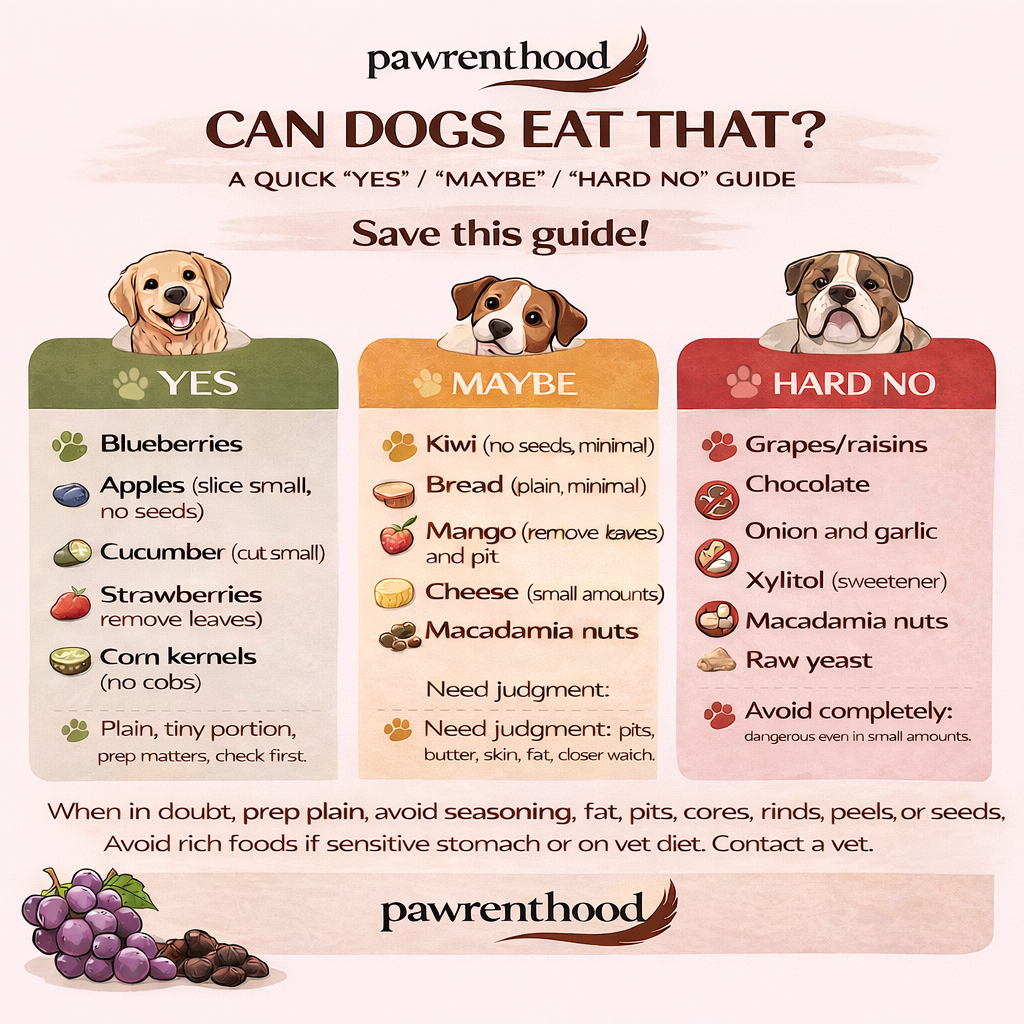
When your dog gives you that look mid snack, it’s normal to want to share. The problem is that “human food” is a huge category, and the danger is rarely the ingredient you expect. It’s usually the extras: seasoning, sugar, fat, bones, pits, seeds, and sweeteners.
Use this page as a fast safety check. If you suspect toxin ingestion (especially grapes or raisins), or your dog is unwell, contact a vet urgently. We’ll continue to update this hub with specific food breakdowns as we go along!
Quick rules first
When in doubt, follow these one-line rules:
- Plain, tiny portion, no seasoning, no pits or seeds, no rind, stop if there’s tummy upset.
- Safe serving rules (applies to most “Yes, in moderation” foods):
- Plain only: no salt, no sauces, no sambal, no curry, no garlic or onion seasoning. (Many seasonings are the real risk.)
- Treat, not meal: human food is an add-on, not a replacement for a balanced diet.
- Start small: introduce one new food at a time, in a tiny amount, and watch stools and itch.
- Prep matters: remove pits, seeds, cores, rinds, peels where relevant.
- Avoid rich foods if your dog has a history of pancreatitis, sensitive stomach, or is on a vet diet.
Most searched “can dogs eat…” quick list
Here are some commonly searched “can dogs eat…” questions pawrents have, and the quick answers at a glance. Use this list as a starting point only – always check the notes beside each food (how it’s prepared, how much is safe, and when to avoid it completely), and when in doubt, speak to your vet.
- Grapes/raisins: No, never. Treat any ingestion as urgent.
- Strawberries: Yes, in moderation. Wash, remove stems, cut small.
- Bananas: Yes, in moderation. Sugary, small pieces only.
- Pineapple: Yes, small amounts. Raw is ok, avoid canned syrup.
- Apple: Yes, in moderation. Remove core and seeds, slice small.
- Blueberries: Yes, in moderation. Wash, start small, watch choking in tiny dogs.
- Watermelon: Yes, in moderation. Remove seeds and rind.
- Bread: Yes, plain in moderation. No nutritional need; avoid dough and sweet breads.
- Mango: Yes, small amounts; remove skin and pit
- Kiwi: Only sometimes; not necessary nutritionally, small pieces only
- Papaya: Yes, moderation; remove seeds and skin
- Cherries: Only sometimes (usually avoid). Pit and plant parts are risky.
- Corn: Yes, moderation; never give corn cob
- Cucumbers: Yes, moderation; cut small
- Dragonfruit: Yes, small amounts; remove skin
- Guava: Yes, small amounts; remove rind and seeds where possible
- Oranges: Yes, small amounts; peel, no seeds
- Cashew nuts: Depends; unsalted only, small amounts
- Eggs: Yes, fully cooked and plain
- Sweet potatoes: Yes, cooked and plain
- Peaches: Only sometimes; remove pit, slice small
- Durian: Only sometimes; rich, tiny amount at most
- Cheese: Depends. Small amounts only, lactose and fat can upset stomach; pancreatitis risk with too much.
- Avocado: Depends (usually avoid). Persin and pit obstruction risk.
Foods dogs should avoid completely (hard no)
If you remember only one thing from this page, remember this: some foods are dangerous even in small amounts, and “wait and see” is the wrong plan.
Grapes and raisins (hard no, urgent)
Grapes and raisins can cause acute kidney injury in dogs, and susceptibility is unpredictable, so any ingestion should be treated seriously.
What you may notice: early vomiting or diarrhoea, then worsening lethargy and appetite loss, with potential progression within 24 to 48 hours.
Other common hard-no foods (brief, but important)
These are widely recognised veterinary hazards.
- Xylitol (sweetener): can cause severe illness in dogs.
- Onion and garlic (allium family): can damage red blood cells.
- Chocolate: toxic compounds can cause serious signs.
- Macadamia nuts: associated with poisoning signs in dogs.
- Alcohol: toxic to dogs.
- Raw yeast dough: dangerous due to fermentation and expansion risks.
Only sometimes (depends): foods that need judgment
These are foods where the ingredient may not be the main problem. The form (pit, skin, fat, salt, dairy) is.
Avocado: usually avoid
Avocado contains persin in the leaves, fruit, seed and bark, and ingestion can cause vomiting or diarrhoea in dogs. Separate issue: the pit can cause gastrointestinal obstruction.
If you do share: it should not be a habit, keep it tiny, and keep pit and skin fully away.
Cheese: depends on your dog
Cheese is often tolerated in small quantities, but it’s high in fat and can contribute to weight gain, and potentially pancreatitis if overfed. Some dogs also react due to lactose intolerance.
Cherries and peaches: fruit is not the issue, pits are
Pits are the hazard (choking, blockage, and toxic compounds in the pit and plant parts). If you cannot confidently remove pits and serve safely, treat as avoid.
Kiwi:
not necessary, tiny pieces at most. Kiwi is not nutritionally required for dogs; occasional tiny pieces may be tolerated, but it’s not a “health need.”
Durian:
treat as “very occasional, very small” Durian is rich and can be a poor choice for sensitive stomachs. If you share at all, keep it as a tiny taste, not a treat routine.
Safe fruits (yes, in moderation) with prep rules
For most dogs, these fruits can be occasional treats when prepared properly. The prep rules are not optional.
Apple
Yes, in moderation. Remove the core and seeds, slice into small pieces.
Banana
Yes, in moderation. Bananas are sugary, so keep portions small and occasional.
Blueberries
Yes, in moderation. Offer washed berries, start small, watch choking for tiny dogs.
Strawberries
Yes, in moderation. Wash, remove leaves, cut smaller for small dogs.
Watermelon
Yes, in moderation. Remove seeds and rind, cut bite-sized pieces.
Pineapple
Yes, small amounts. Raw pineapple in small amounts is generally fine; avoid canned pineapple in syrup.
Mango
Yes, small amounts. Remove skin if it upsets the stomach, and remove the pit.
Papaya
Yes, in moderation. Remove seeds and skin, offer small cubes.
Oranges
Yes, small amounts. Peel and remove seeds, keep portions small.
Dragonfruit
Yes, small amounts. Offer only the flesh, remove skin, start small.
Guava
Yes, small amounts. Remove rind and seeds where possible, introduce slowly.
Common household foods (with watch-outs)
Eggs
Yes, if fully cooked and plain. Avoid cooking oils, butter, salt, and seasoning.
Bread
Yes, plain in moderation. It’s not nutritionally useful, and avoid dough, sweet breads, and anything with raisins, garlic, or onion.
Corn
Yes, corn kernels are fine in moderation. Never give corn cob, it can cause obstruction.
Cucumbers
Yes, in moderation. Slice to avoid choking, especially for small dogs.
Sweet potatoes
Yes, cooked and plain. Avoid sugar, butter, seasoning.
Cashew nuts
Depends. If given, use unsalted cashews only, and keep it minimal due to fat content.
When to see a vet now (red flags)
Go from “watch” to “call” when any of these are true:
- Suspected toxin ingestion, especially grapes or raisins, chocolate, xylitol, onions, macadamias.
- Repeated vomiting, persistent diarrhoea, or vomiting plus lethargy.
- Breathing difficulty, collapse, severe weakness.
- Severe abdominal pain signs (restlessness, guarding, unwilling to move).
- Choking, repeated gagging, or trouble swallowing (especially after bones, pits, cobs).
- Signs worsening instead of improving over the same day.
Other Commonly Asked Questions by Pawrents (FAQ)
What human foods are toxic to dogs?
High-risk examples include grapes/raisins, xylitol, onion/garlic, chocolate, and macadamia nuts.
How much is too much?
For “safe foods,” the limit is usually not a strict number. The practical rule is treat-sized portions, plain, and stop if you see tummy upset. For toxic foods like grapes and raisins, any amount can be serious.
What should I do if my dog ate something toxic?
Treat it as urgent. Gather what you can (what food, how much, when), and contact a vet. For grape or raisin ingestion, do not “wait for symptoms.”
Is cheese always safe?
No. Cheese can cause digestive upset in lactose-intolerant dogs, and too much fat can create bigger problems over time. Keep it small and occasional.
Is avocado safe if it’s just the flesh?
Still risky. Avocado contains persin across parts of the plant, and the pit is a major obstruction hazard. Many dogs do not need avocado at all.
Can I give fruit every day?
Fruit is a treat, not a dietary requirement. If you give fruit often, keep portions tiny and rotate, and prioritise your dog’s normal balanced diet.