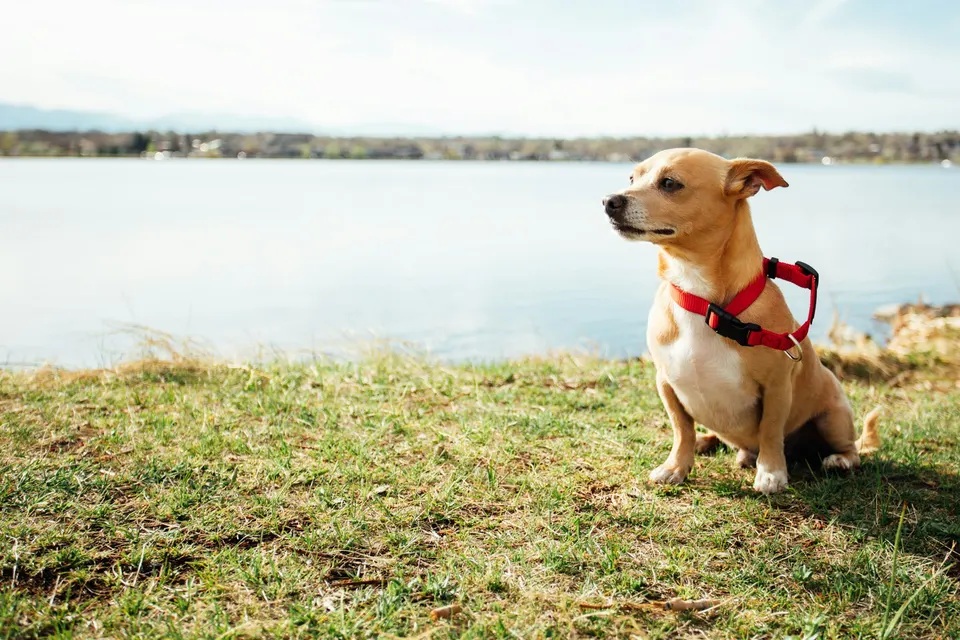
A friend of ours — we'll call her Mei — adopted a sweet, long-bodied dachshund from an HDB flat in the East. At his very first vet visit, the vet jotted a small note: "mild flea dermatitis, recurrent, monitor." Two years later, a lump on his belly turned out to be a mast cell tumour. Her dog insurance claim was denied. The reason? "Pre-existing skin condition." A throwaway line in a two-year-old vet record had quietly voided the most important claim of her life.
This is the part of dog insurance Singapore pawrents rarely hear about until it happens to them. This guide isn't a ranked roundup. It's the honest framework we wish someone had handed us before our first policy — and we'd rather teach you how to choose your own plan than crown a winner on your behalf.
The SGD 4,200 Vet Bill That Wasn't Covered
Mei's story isn't unique. We've heard versions of it from Frenchie pawrents whose "seasonal allergy" notes killed their skin claims, and from golden retriever owners whose "mild limping" puppy notes later haunted a cruciate surgery claim. In Singapore's tropical climate, small skin and gut notes appear in vet records early and often — and insurers can use any one of them to reclassify a later, serious condition as pre-existing.
The uncomfortable truth is that pet insurance in Singapore works exactly as its policy wording says it does. It's not that insurers are villains. It's that most pawrents don't read the 40-page PDF before clicking "buy." We're going to fix that together, without fearmongering and without affiliate-ranked "winners."
Do You Actually Need Dog Insurance?
Let's paws and think about this honestly. The answer is: it depends. Dog insurance in Singapore isn't a universal "yes, always" — it's a risk-management decision that depends on your dog's age, breed, and your financial buffer.
Here's who clearly benefits:
- Young dogs (under 4 years) with a long insurable runway ahead of them
- High-risk breeds like Dachshunds, Frenchies, Corgis, Goldens, and Poms (we'll get to the breed matrix below)
- First-time pawrents without a sizeable emergency fund — one IVDD surgery can wipe out a year of savings
- Pawrents in shared housing (HDB or condo) who want third-party liability protection for bite or noise-escalation scenarios
And here's who can reasonably self-insure:
- Older adopted mixed breeds with a clean health history, where pre-existing exclusions will gut most claims anyway
- Pawrents with a comfortable SGD 10,000+ emergency fund they'd happily spend on their dog
- Families who view pet care purely as cash-flow, not as a product to hedge
There's one more angle worth knowing about: third-party liability coverage. Some dog insurance policies include legal defense and payouts if your dog bites a neighbour in the lift lobby, damages a rental flat's skirting, or is central to an escalated noise complaint. In a country where most of us live in flats — HDB or condo — that coverage can matter more than the surgery limit.
Both "insurance as peace of mind" and "self-insure with an emergency fund" are legitimate. The wrong move is drifting into the decision without reading the fine print. For the broader picture, our full cost breakdown of owning a dog in Singapore and HDB-approved dog breeds guides are good companions to this one.
Real SGD Vet Bills — What Insurance Is Actually Protecting You Against
Before we talk about policy limits, let's ground this in reality. A policy that covers "up to SGD 15,000 of surgery" only matters if you know what surgery actually costs in Singapore. These are the rough 2026 ranges we've seen quoted at Mount Pleasant Vet Group, The Animal Clinic, and other specialist centres. Yours may differ — always get a quote.
🦴 IVDD (disc herniation) surgery: SGD 6,000–10,000 — common in Dachshunds, Corgis, and Frenchies 🦵 Cruciate ligament surgery (TPLO / TTA): SGD 4,000–8,000 — most common in large breeds 😮💨 Frenchie BOAS airway surgery: SGD 3,500–6,000 🎗️ Cancer treatment (surgery + chemotherapy): SGD 8,000–15,000+ 👁️ Cherry eye correction: SGD 800–1,500 🪥 Dental extractions under general anaesthesia: SGD 1,200–3,000 🫁 Foreign body GI surgery (a swallowed sock, a corn cob): SGD 3,000–5,500 🚑 Overnight ICU hospitalisation: SGD 400–800 per night 💉 Emergency vet visit with diagnostics: SGD 300–800
A few things jump out. One IVDD surgery can wipe out months of household savings. Cancer care routinely crosses SGD 10,000 before the "what now?" conversation. And a single emergency visit — before any treatment even begins — can cost more than a full year of insurance premiums.
Pro tip for pawrents: Save our emergency vet clinics guide to your phone favourites. Most serious claims start with a 3am emergency visit, not a planned procedure. And if you already have a plan in place, schedule your annual check-up early in your policy year so you're not scrambling when renewal rolls around.
Planning your pawrenting budget?
Join Singapore pawrents getting our best tips — plus a free Essential Kit with our favourite gear picks for SG living.
Get the free SG Pawrent Essential KitHow Dog Insurance Actually Works
Policy documents are written in a dialect of their own. Let's translate every term that matters.
Annual limit vs per-condition limit
The annual limit is the total amount your insurer will pay out in one policy year — usually between SGD 10,000 and SGD 25,000 on mainstream SG plans. The per-condition limit is a sub-cap: even if your annual limit is SGD 20,000, a single condition (say, cancer) might be capped at SGD 8,000. Check both numbers. The per-condition cap is where many pawrents get caught short on the bills that matter most.
Co-insurance (usually 20%)
Co-insurance is the percentage of every bill you pay after the deductible. If your plan has 20% co-insurance and the vet bill is SGD 5,000, you're paying SGD 1,000 of it. Budget plans sometimes have 30% co-insurance; premium plans go as low as 10%. Over a big claim, this single number can swing your out-of-pocket cost by thousands.
Deductible (SGD 100–250)
The deductible is the flat amount you pay before the insurer starts reimbursing. Some plans apply it per claim, others per policy year. Per-year is friendlier if you expect multiple claims; per-claim penalises frequent small visits.
Waiting periods — the 14-day trap and the 6-month trap
Almost every dog insurance plan in Singapore has waiting periods. The general waiting period is usually 14 days from policy start — anything diagnosed before that is not covered. Then there's the silent killer: many plans impose a longer waiting period (often 6 months) on cruciate ligament conditions. That means if you buy a policy for your new puppy today, and six months from now they tear a cruciate jumping off the sofa, your claim may be denied. This trips up more pawrents than any other single clause, so confirm the exact wording before you buy.
Reimbursement model
You pay the vet in full, then file a claim afterward. There is no direct billing in Singapore the way there is for human medical insurance. That means you need the cashflow up front — which is why many pawrents underestimate how much liquid money they actually need on claim day.
Age cutoffs
Most SG insurers don't accept brand-new enrolments after age 8 or 9. Once you're in, you can usually keep renewing for life. This is why the best time to buy is when your dog is young. More on that below.
A Worked Example — A SGD 6,000 IVDD Surgery, Three Different Policies
Let's make this concrete. Imagine a 5-year-old dachshund in a Tampines HDB flat, no prior claims this year, who suddenly can't use his back legs. The neurologist recommends emergency IVDD decompression surgery at a specialist centre. Final bill: SGD 6,000.
Here's how three illustrative 2026-style policies would handle it. (These numbers are illustrative to teach the maths — always check the current product page for actual terms.)
Policy A — mid-tier plan
- Annual limit: SGD 15,000
- Co-insurance: 20%
- Deductible: SGD 200
- Math: SGD 6,000 − SGD 200 = SGD 5,800 → 80% of SGD 5,800 = SGD 4,640 insurer pays
- You pay: SGD 1,360
Policy B — budget plan
- Annual limit: SGD 10,000
- Co-insurance: 30%
- Deductible: SGD 250
- Math: SGD 6,000 − SGD 250 = SGD 5,750 → 70% of SGD 5,750 = SGD 4,025 insurer pays
- You pay: SGD 1,975
Policy C — premium plan
- Annual limit: SGD 25,000
- Co-insurance: 10%
- Deductible: SGD 100
- Math: SGD 6,000 − SGD 100 = SGD 5,900 → 90% of SGD 5,900 = SGD 5,310 insurer pays
- You pay: SGD 690
The gap between the cheapest and most generous plan on the same bill is nearly SGD 1,300. That's the real maths of co-insurance and deductibles. Brand names matter far less than these three numbers: annual limit, co-insurance, deductible. When comparing plans, line those up first.
The Exclusions Nobody Puts in the Marketing
Every dog insurance plan in Singapore has exclusions. Here are the seven categories that catch pawrents off-guard most often, and what they actually mean.
Pre-existing conditions. This is the big one. A pre-existing condition is anything noted, diagnosed, or even hinted at in a vet record before your policy start date — or, for some plans, before the waiting period ends. The tricky part: it doesn't need to be a formal diagnosis. A single note about "mild itchiness" or "recurrent soft stools" can later be invoked to deny a dermatology or gut claim. This is exactly how Mei's mast cell tumour claim was denied. Read every vet note before you sign up.
Hereditary and congenital conditions. Some insurers exclude them outright. Others cover them only if the condition wasn't visible or diagnosable before the policy start. This matters most for high-risk breeds: hip dysplasia in Goldens, patellar luxation in Poodles, BOAS in Frenchies. Ask explicitly: "Are hereditary conditions covered if they become symptomatic after my policy starts?"
Routine and preventive care. Annual check-ups, vaccinations, flea and tick prevention, deworming — these are almost never covered on base plans. Some insurers sell optional wellness add-ons, but do the maths: you're usually better off budgeting for routine care separately.
Dental care. Routine dental extractions are almost always excluded unless the damage was caused by an accident. Dental disease is one of the most common vet expenses in Singapore dogs, so if dental matters to you, check the wording carefully.
Behavioural conditions. Anxiety medication, behavioural training, and conditions like separation anxiety are typically excluded on base plans.
Pregnancy and breeding. If you're breeding, you need a specialist policy — mainstream plans exclude everything reproductive.
Elective procedures. Neutering, ear cropping (illegal in Singapore anyway), and cosmetic procedures aren't covered. If you're budgeting for neutering, see our neutering costs and coverage guide.
Pro tip for pawrents: If an insurer doesn't publish a full policy wording PDF on their public website, treat that as a red flag. Transparent insurers give you the whole document before you buy. We'd rather read a boring 40-page PDF than be surprised at claim time.
Breed Risk Matrix — Why Your Dog's Breed Changes the Math
Breed is probably the single biggest factor in whether insurance pays off for your household. Here's how the common Singapore breeds stack up.
🌭 Dachshund — IVDD is the #1 risk, with a lifetime probability often cited at around 20–25%. Insurance strongly recommended, ideally before 6 months old. Our full Dachshund Singapore guide covers what to watch for.
🐕 Corgi — IVDD plus hip dysplasia. Similar risk profile to dachshunds, and they're surprisingly common in HDB flats. Strongly recommended. Read our Corgi in Singapore guide.
🦴 Golden Retriever — Cancer, cruciate ligament injuries, and hip dysplasia. Higher premiums, but high value given the known risk profile. See our Golden Retriever Singapore guide.
👀 Shih Tzu — Eye conditions (including cherry eye), allergies, and dental disease are common. Mid-value coverage, but dental-related exclusions will limit how much you claim. Our Shih Tzu Singapore guide.
🧸 Toy Poodle — Patellar luxation, dental issues, and occasionally Addison's disease. Mid-value insurance case. Our Toy Poodle Singapore guide.
✨ Pomeranian — Tracheal collapse, patellar luxation, and dental problems. Small breed but surprisingly expensive claim profile. Our Pomeranian Singapore guide.
🐶 Singapore Special / mixed breed — Mixed breeds generally enjoy better health thanks to genetic diversity. For them, insurance leans more "financial cushion" than "medical necessity." Many pawrents of Singapore Specials do fine self-insuring with a strong emergency fund.
Frenchies sit in their own category. Between BOAS, skin conditions, and spinal issues, they're among the most expensive breeds to insure — and also among the ones where insurance most clearly pays off.
The 5 Reasons Claims Get Denied (And How to Avoid Each)
After reading through dozens of claim write-ups, Facebook group threads, and community stories, the same five denial reasons come up again and again.
1. Pre-existing condition flag. Anything noted in a vet record before your policy start (or before the waiting period ends) can disqualify a related claim years later. How to protect yourself: pull your dog's full vet history before applying and disclose everything. Better to be declined upfront than denied later.
2. Waiting period violation. The 6-month cruciate waiting period is the biggest silent denier. How to protect yourself: note your key waiting period end-dates in your calendar, and be extra cautious during the first half-year of cover.
3. Missing documentation. Claims fail every week because of missing itemised invoices, missing diagnostic reports, or missing referral letters. How to protect yourself: ask your vet for a complete claim pack, including diagnostic imaging and lab results, not just a receipt.
4. Non-disclosure at application. If you forgot to mention a past vet visit on your application, even an unrelated one, the insurer can void a claim for "material non-disclosure." How to protect yourself: over-disclose. List every prior vet visit, even the minor ones.
5. Hereditary condition exclusion. A condition you didn't realise was classified as hereditary gets denied on technical grounds. How to protect yourself: specifically ask the insurer whether a breed-linked condition (like BOAS or hip dysplasia) is covered if it becomes symptomatic mid-policy.
Want to stay on top of your dog's health?
Join Singapore pawrents getting our best tips — plus a free Essential Kit with our favourite gear picks for SG living.
Get the free SG Pawrent Essential KitThe Puppy-First Purchase Window
If there's one single takeaway from this whole guide, it's this: buy insurance before your puppy's first full vet check-up. Not after.
Here's why. At that first comprehensive vet visit, the vet will write notes. Some of those notes will be completely routine. But a few — "slight heart murmur, monitor," "mild skin irritation," "occasional loose stool" — can later be weaponised as pre-existing conditions when you file a real claim years down the road.
The ideal timeline looks like this:
- Adopt or bring home your puppy
- Get your puppy microchipped and do initial core vaccinations (these are straightforward)
- Purchase your insurance policy
- Wait out the 14-day general waiting period
- Go in for the first full health check
This way, anything discovered at the health check is a fresh finding during cover, not a pre-existing condition. You're buying insurance before you know what you don't know. For the full new-puppy sequence, our first-time dog owner checklist, microchipping your dog guide, and AVS dog licensing rules walk through the practical steps in order.
Most insurers accept puppies from around 8–16 weeks. Most won't accept new enrolments after age 8 or 9. So if you're on the fence with an older dog, waiting another year usually makes it worse, not better.
When NOT to Claim (The Counter-Intuitive Bit)
This is the part no affiliate roundup will ever tell you. Sometimes filing a claim is not worth it.
Small claims are where this matters most. If your vet bill is SGD 280 for a skin flare-up, and your deductible is SGD 200, you're filing a claim to recover SGD 64 after co-insurance. Weeks of paperwork. A possible impact on your renewal premium. Possible future scrutiny on anything related to that skin note. In many cases, you're better off paying out of pocket and keeping your claim history clean.
A simple rule of thumb we've come to trust:
- Claim anything surgical. Always.
- Claim anything over SGD 800. The reimbursement is worth the paperwork.
- Pay out of pocket for minor visits under SGD 300. Protect your claim history.
- In the SGD 300–800 middle zone, use your judgment. Is this likely to become a recurring condition? If yes, claim. If it's a one-off, consider absorbing it.
Think of it the way you'd think of a no-claim discount on car insurance. The peace of mind is in knowing the coverage is there for the scary stuff. Don't burn it on a skin rash.
The Current Insurer Landscape (2026 Reference)
This is a reference, not a ranking. We're going to refuse, on principle, to crown a "best" plan. What's best depends on your dog, your budget, and your risk tolerance. But here's a factual snapshot of some of the names active in the 2026 Singapore market. Always verify current terms, premiums, and underwriters on the insurer's own website before buying.
🛡️ MSIG PawEasy — MSIG's pet-specific product, sold in three tiers (PawPat, PawRun, PawPlay). Headline hospitalisation and surgery cover runs up to around SGD 20,000 at the top tier, with eligibility from roughly 16 weeks to 9 years. Worth checking whether third-party liability is bundled or optional for your tier.
🛡️ Aon HappyTails — A long-standing, standalone online pet insurance brand, arranged by Aon Singapore and underwritten by Income Insurance. Well-documented claim experiences exist in the community, which makes it easier to pressure-test the fine print against real stories.
🛡️ Tiq by Etiqa — Publishes its full policy wording PDF on its website, which we consider a major transparency win. If you like reading the fine print before buying, this makes your life easier.
🛡️ Liberty PetCare — A long-running option with multiple tier levels. Check per-condition sub-caps carefully here — they've historically been tighter than the headline annual limit suggests.
🛡️ CIMB My Paw Pal — A bank-distributed plan with competitive entry-level premiums. Always confirm who the actual underwriter is and read their wording.
🛡️ AIA Paw Safe — Notable because it's primarily an accident and third-party liability plan rather than a full illness policy. That makes it significantly cheaper, but also far narrower — most of the big illness-driven surgeries on our vet bill list are not covered. Good fit for pawrents who want cheap catastrophic and liability coverage, typically stacked alongside another plan or a solid emergency fund.
The right plan depends on your dog's breed, age, your budget, and whether third-party liability matters for your living situation. Use the decision tree below to narrow it down.
The Decision Tree — Should I Buy Dog Insurance?
Run through these questions. Give yourself a tally.
- Is your dog under 4 years old? → If yes, lean toward insurance.
- Is your dog a high-risk breed (Dachshund, Frenchie, Corgi, Golden, Pom, Shih Tzu)? → If yes, lean toward insurance.
- Do you have an accessible emergency fund of SGD 10,000+ you'd spend without hesitation on vet care? → If no, lean toward insurance.
- Do you live in shared housing (HDB or condo) where a bite incident or noise escalation could turn legal? → If yes, third-party liability coverage becomes a real factor.
- Has your dog had any prior vet-recorded condition, however minor? → If yes, the clock is ticking — buy now, before more notes accumulate.
- Do you want peace of mind more than you want pure financial optimisation? → If yes, lean toward insurance.
If two or more answers push you toward insurance, it's probably worth the premium. If most push you away, a well-funded emergency account may serve you just as well.
Pawrents Ask (FAQ)
How much is dog insurance in Singapore per month?
Base plan premiums for dogs under age 5 typically start around SGD 25–55 per month, depending on breed and plan tier. Larger breeds, older dogs, and premium-tier plans can push that to SGD 80–120+ per month. Always compare the annual cost, not just the monthly headline, since some plans increase meaningfully at renewal.
What is not covered by pet insurance in Singapore?
Most plans exclude pre-existing conditions, routine check-ups, vaccinations, flea and tick prevention, most dental care, behavioural conditions, pregnancy-related issues, and elective procedures like neutering. Hereditary and congenital conditions are excluded on some plans and covered on others — always check the wording.
Can I insure an older dog?
Usually yes, but with constraints. Most insurers won't accept new enrolments after age 8 or 9. If your dog is already on a plan before that cutoff, you can typically renew for life. If you're considering insurance for an older dog, check age eligibility before doing anything else — otherwise you'll waste time comparing plans you can't actually join.
Does pet insurance cover IVDD surgery?
Most comprehensive dog insurance plans in Singapore cover IVDD surgery, which typically costs SGD 6,000–10,000. The key things to check: your annual limit is high enough, the per-condition sub-cap isn't too restrictive, and you're past the general waiting period. IVDD is not usually subject to the longer cruciate-specific waiting period, but confirm this in your own policy wording.
Is pet insurance worth it for a mixed breed?
Mixed breeds generally have lower hereditary and congenital risks thanks to genetic diversity, so insurance functions more as a financial cushion than a medical necessity. If you have a strong emergency fund, self-insuring can be perfectly rational. If you don't, insurance still offers peace of mind — just budget for base-tier plans rather than premium ones.
What happens if my insurer denies my claim?
You can formally appeal the decision with supporting documentation from your vet, including diagnostic records and a written statement explaining why the condition shouldn't be considered pre-existing or excluded. If the appeal fails, you can escalate to the Financial Industry Disputes Resolution Centre (FIDReC). Most denials stem from documentation or disclosure gaps, so thorough vet records are your best defense.
The Pawrenthood Take
If you remember only three things from this guide, remember these. Buy early, ideally before your puppy's first full vet check — timing saves more money than any plan comparison ever will. Read the exclusions in the actual policy wording PDF, not just the marketing page. And understand the math of annual limit, co-insurance, and deductible — those three numbers drive everything.
No insurance is perfect. Some pawrents, especially those with older mixed breeds and solid emergency funds, rationally choose to self-insure. Others, especially those with high-risk breeds or tight cashflow, get enormous peace of mind from a good policy. Both can be the right answer. Whichever route you choose, the goal is the same — fewer ruff surprises at the vet counter.
A few closing takeaways:
- Pre-existing exclusions are the #1 trap. Buy before your dog has a vet record.
- Annual limit, co-insurance, and deductible matter more than brand name.
- The longer cruciate waiting period is the silent claim-killer.
- Small claims (under SGD 300) often aren't worth filing.
- Pawrents in flats should check whether third-party liability is included.
- Always read the full policy wording PDF before buying.
For the full picture of what life with a dog in Singapore costs — insurance, food, grooming, vet, the lot — our full cost breakdown of owning a dog in Singapore is the natural companion to this guide.
Have a claim story — denied or approved — you'd be willing to share with fellow pawrents? Drop us a message. The more real stories we compile, the better this community gets at protecting each other.
This article is general information, not financial or veterinary advice. Pet insurance products, terms, premiums, and underwriters change frequently — always review the current policy wording PDF and speak to your vet or insurer directly before buying a plan.