TL;DR: Private pet flights from Singapore offer a way to travel with your dog or cat in the cabin, but compare the total for your party, not just a headline fare. A shared package and a whole-aircraft charter buy different things. The three options below comprise an advertised holiday, a provider-reported past charter and a quote-only service. Before paying, confirm your pet's eligibility, the actual aircraft operator, airports, inclusions and refund terms. A private flight does not waive border rules.
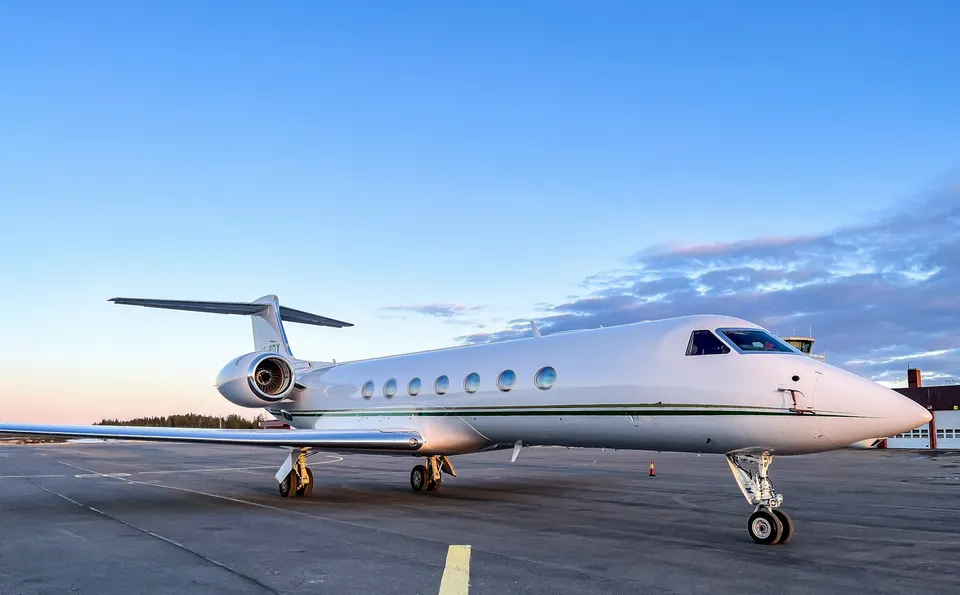
Cover photo: Niklas Jonasson on Unsplash. Illustrative private-jet photo taken in Sweden, not an aircraft confirmed for any featured provider.
Provider pages and official sources checked on 17 September 2026. Prices below retain their advertised currency; availability has not been confirmed with providers.
Before deciding on a charter, compare all the travel options in our guide to flying with your pet from Singapore, including commercial flights and the choice between DIY planning and agent help.
When private pet flights from Singapore are worth considering
Start with the problem you need the flight to solve. Is your pet unsuitable for the available commercial itinerary? Do you need to keep several pets together? Is travelling in the cabin essential to your decision, or are you mainly hoping for a simpler airport experience?
Use those answers to choose what to request: a shared departure, a whole aircraft or a scheduled-flight alternative. A flexible holiday and a move tied to a tenancy deadline need different backup plans. For a holiday, include trusted care at home in the comparison. Spending more on transport does not, by itself, establish that travelling is the right decision.
Do not assume all ordinary pets must travel as manifest cargo on commercial airlines. Singapore Airlines distinguishes checked-baggage pet carriage from cargo, subject to its restrictions. That does not establish acceptance on your proposed flight, but it is a useful baseline before committing to a charter budget.
For a pet with health concerns, discuss the actual journey with your vet: the flight, transfers, unfamiliar surroundings and time away from home. IATA's passenger guidance makes fitness to travel a separate consideration. Being beside you in a cabin is not a medical assessment.
Shared charter or whole aircraft: what are you buying?
Use three separate questions to understand an offer: what space are you purchasing, who arranges the journey, and who operates the flight?
A shared charter sells an allocation on an aircraft used by more than one booking party. The allocation might be described as a seat or as a passenger-and-pet package. Ask for the permitted people, pets and baggage in writing. A two-person package is not necessarily two independently priced seats, and another pet may need a different quotation.
A whole-aircraft charter means your party books the aircraft rather than one allocation. Ask whether the quote covers a single sector, a return trip or several sectors. Do not calculate a per-person price by dividing by the aircraft's maximum seat count before the operator has accepted your actual passenger, pet and luggage list.
The organiser may coordinate the holiday and documents. A broker may source an aircraft from another business. The direct operating carrier performs the flight. Several businesses may be involved. What matters is that the contract makes their responsibilities clear.
Ask which legal entity takes your deposit, which entity operates each leg, and who handles a failed clearance or cancelled departure. Request relevant operating and insurance documentation for the named carrier. A travel brand's credentials should not be treated as evidence about an unnamed aircraft operator.
Three providers for private pet flights from Singapore
This is a shortlist of different purchasing routes, not a quality ranking. Only one of the checked pages supplies a dated shared-holiday package price. The absence of a public tariff for the others is a reason to request a comparable quote, not to invent a price range.
SingaPaw Air / The Asian Pawrent: an organised pet-travel offer
Treat SingaPaw Air as the pet-travel organiser in your comparison, not as proof that the brand itself is the direct aircraft operator. Its own service description refers to aviation collaborations and Seletar arrangements. Ask who will operate your particular booking.
Its advertised Japan round trip is 12-27 December 2026: USD 34,400 for one passenger plus one pet under 8kg, or USD 49,500 for two passengers plus one pet. Paperwork service charges are waived. These are advertised packages, not verified available seats.
Separately, whole-aircraft relocation prices on that page start from USD 30,000 for Jakarta, USD 140,000 for Melbourne and USD 250,000 for Munich. Do not compare those starting prices with the Japan return package as if they bought the same journey.
The provider's documentation page covers permits, serology, health certification and quarantine arrangements. Coordination is useful, but a waived service charge does not establish that veterinary work, laboratory charges, government fees or accommodation are free.
For an itemised quote, ask which of those costs are included, what weight allowance applies to the two-passenger package, and what happens if either the departure or your pet's documents cannot be confirmed. The Japan preparation deadline below should come before any non-refundable payment.
Air Charter Service: a broker with a reported Singapore-Japan charter
Air Charter Service's case study, dated 2 July 2025, reports arranging Singapore-Kagoshima and Nagoya-Singapore flights on a Challenger 605 for owners travelling with their dog. It describes sourcing a pet-friendly operator and using a specialist agent for permits and inspections.
That is evidence of a provider-reported past arrangement, not a current scheduled service. The case gives no customer price and does not identify the Singapore airport. It cannot tell you what your proposed journey will cost or which aircraft will be available.
A bespoke charter enquiry is relevant when your dates or route do not fit an advertised shared holiday. Send the same passenger, pet, date and baggage brief you would send to any other charter arranger.
Ask ACS to separate the aircraft quotation from pet-clearance services. Establish whether it will contract with the specialist agent or expects you to do so, and which party checks that the proposed arrival airport can admit your pet. The response should identify who is responsible for the flight and who is responsible for clearance.
Air 7 Asia: aviation services, not the direct carrier
Air 7 Asia's website offers charter enquiries from its Singapore base. Its disclaimer says Air 7 Asia Pte Ltd is not a direct air carrier; it names Air 7, LLC or Osprey Aviation Ltd as the providers of its charter flights. The checked page has no dated shared-pet departure or public pet-seat fare.
Use it as a quote-based aviation enquiry, not as a second published tariff to place beside SingaPaw's package. Ask whether it accepts your pet on the proposed aircraft, who supplies the flight and whether veterinary coordination is part of its quotation.
If you are speaking with an organiser as well, ask whether the two proposals use the same underlying aircraft and operator. Two brand names do not necessarily mean two independent flight options. Equally, a partnership logo does not establish the operator, price or terms of your booking.
Compare the full cost, not just the flight price
The practical comparison is the amount your household must pay to complete the itinerary. Put each quote into the same set of categories. Label every line included, additional, not needed or awaiting confirmation. Do not treat silence as inclusion.
Aircraft and airport costs
Request a total covering your precise sectors and passenger-and-pet allocation. Ask whether taxes, handling, landing charges, crew costs, positioning the aircraft, parking and any planned fuel stops are included. These are questions for the quotation, not a claim that each provider charges each item separately.
For a return holiday, establish whether both legs are priced and contractually linked. Who pays if the outward flight goes ahead but a different aircraft is needed to bring you home? What happens if an airport change adds a long ground transfer?
For a shared departure, ask whether there is a minimum number of paid bookings, when the flight becomes confirmed, and whether your price can change if another party withdraws. A low initial deposit is not the same thing as a low maximum financial exposure.
Pet preparation and handling
Ask for separate lines for document assessment, veterinary appointments, blood testing, laboratory submission, government endorsement, permits and arrival handling. Mark who performs each task and who pays each invoice. If a document must be corrected, establish whether the quoted support covers the additional work.
Keep government charges distinct from an agent's service fee. For example, the AVS export procedure lists an export licence at SGD 50 under normal service or SGD 100 under express service. That is not a total pet-travel paperwork price.
If you only need help with particular stages, our Singapore pet-relocation agent guide is a starting point for enquiries. Ask for the scope you need rather than assuming that a flight booking necessarily requires buying a full relocation package.
Ground travel, accommodation and currency
Check airport transfers at both ends, pet-friendly accommodation, any holding or quarantine costs and the cost of extending your stay after a delay. For ground transport you arrange yourself, the pet-taxi guide can help you shortlist local options. Give the driver the actual terminal and approved collection instructions, not just an airline or airport name.
The provider prices above are in US dollars, not Singapore dollars. We have not converted them. Ask which currency you must pay, whether a conversion rate is fixed at deposit or settlement, and which bank or card charges are yours. If a refund is due, ask whether it returns the original currency amount and whether payment fees are refundable.
Keep confirmed charges and unresolved costs separate. Ask for a quotation expiry date and a list of circumstances that permit repricing. Before accepting an all-in figure, check that the included services match your itinerary and that the exclusions are explicit.
Check the route before paying a deposit
Confirm the airports, not just the cities
A proposal labelled Singapore-Japan is not a complete airport itinerary. Get the departure and arrival airports, any intermediate stops, terminal or handler, and arrangements for pet inspection. Ask who confirms that each port can accept your species and paperwork on the planned date.
SingaPaw's Seletar descriptions should not be read as Changi instructions. AVS's CAPQ page requires an AVS-recognised agent for import clearance at CAPQ, including accompanied pets, and directs arrivals through other ports to contact AVS. It does not establish the clearance procedure for your Seletar charter.
Have the organiser obtain the applicable airport-specific instructions and identify the responsible handler. Do not substitute SIN/Changi for Seletar in the paperwork or collection plan. Ask whether the pet needs a carrier during transfers or inspection even if the flight is marketed around cabin freedom. Include a plan for arriving after an operational delay.
Considering France rather than Japan? Our Singapore-to-France pet travel guide covers the country-specific journey and return planning. It does not confirm that a charter provider operates your proposed route.
The December Japan offer needs an existing preparation history
Singapore is not among Japan's designated regions. Under the applicable MAFF dog-and-cat procedure, preparation includes a compliant rabies process and at least 180 days after blood sampling, plus advance notification at least 40 days before arrival.
There are 86 days between 17 September and 12 December 2026. A pet beginning that 180-day wait on the check date cannot finish it before the advertised departure. Paying for a private flight does not shorten the interval.
A pet with an existing valid preparation history may still qualify. Have the actual microchip, vaccination and laboratory records assessed before committing; an old antibody result alone is not enough. Our microchipping explainer provides background on identification; MAFF's current requirements control entry.
Use our Singapore-to-Japan pet travel guide to work through the document sequence and travel calendar alongside the charter enquiry.
Plan the return while booking the outward flight
For a holiday, ask for a separate return checklist tied to your pet's travel history, your own movements and the agreed airport. Use AVS's current dog-and-cat import requirements, not an assumption that leaving Singapore makes re-entry automatic.
Identify the overseas vet and any government endorsement needed before you go. Ask the coordinator to check the entire timeline, including vaccinations and testing, against both directions. An outward certificate should not be treated as permission for every later movement.
Ask the coordinator to show how the applicable return conditions fit your records. Do not budget on an unconditional promise of no quarantine, or assume that a short holiday is automatically prohibited. Resolve eligibility questions before money becomes non-refundable.
Our quarantine-free pet travel comparison can help you compare the border requirements before choosing the aircraft or destination.
Book in four steps
1. Prepare one accurate travel brief
List the people travelling, each pet's species, breed, age and weight, your preferred dates and flexibility, baggage, departure point and final destination. Say whether this is relocation or a round trip. Include behaviour or health considerations relevant to cabin arrangements, without sending unnecessary personal documents in an initial enquiry.
Use the same brief for each provider. Otherwise, one quote might cover two people and a return journey while another covers one person and a one-way sector. That is a scope difference, not necessarily a saving.
2. Clear the document timeline before the deposit
Ask for a record assessment and a dated task list. Each task should have a named owner, a deadline and a consequence if it is late. Confirm which deadlines are official requirements and which are the provider's own administrative cut-offs.
Use a secure channel for documents once you know who is receiving them. Keep original records accessible and request a list of what must physically travel. Decide who will check names, microchip numbers and itinerary details across the final paperwork.
3. Read the change and cancellation terms
Request written answers to these questions:
- When is the flight confirmed, and is there a minimum booking threshold?
- What is refundable if the provider cancels, the aircraft changes or the route cannot be approved?
- What happens if your pet fails a document check or your vet advises against travel?
- Can an aircraft, airport or operator be substituted without your agreement?
- Who pays for extra accommodation, handling or a replacement flight after disruption?
- When is each payment due, and how long should an approved refund take?
Use the answers to compare the financial risk, not just the fare. They are not promises that any provider offers a particular protection. Ask for the agreed terms to form part of the booking documents, including any deadline by which you can withdraw without further payment.
4. Confirm the whole handover
Before departure, get one itinerary showing collection, check-in, flight, inspection and onward transport, with an accountable contact for each transition. Confirm baggage and pet-restraint arrangements with the actual operator. For a shared cabin, discuss separation, feeding and handling expectations for all animals rather than assuming they will be comfortable together.
Agree what happens if the pet is unwell on the day, a document is questioned or the aircraft is delayed. Keep your own copies of the booking, official approvals and emergency contacts. Before you leave home, you should know whom to call and who can authorise the next step if the itinerary changes.
Frequently asked questions
Is a shared pet charter the same as an airline ticket?
Do not assume it has the same conditions. Establish whether you are buying a confirmed allocation, joining a proposed group departure or commissioning a whole aircraft. Ask for the booking's confirmation threshold and cancellation terms. An advertised date alone does not establish a confirmed departure.
Can a large dog or a cat travel in a private cabin?
Ask for acceptance of your particular animal on the named aircraft. Check its space, restraint or carrier arrangements, and any shared-cabin compatibility requirements. Do not extend a small-pet package price to a larger dog or assume that accepting dogs means the same arrangement works for cats.
Does a private jet let my pet avoid quarantine?
No exemption should be inferred from the aircraft type. Check the destination authority's rules and AVS's return requirements against your pet's records. Ask the organiser which conditions support its proposed itinerary, rather than relying on a general assurance about quarantine-free travel.
Can I organise the paperwork myself?
You can organise records and compare appointments and service quotes. Establish which applications permit owner handling and which clearance steps require an agent. The CAPQ requirement does not mean you must buy every preparation service as one package, and it does not settle Seletar procedures. Ask for responsibilities by task.
How do I find the cheapest suitable option?
Compare the same dates, people, pets, sectors and service scope, then check the risks you retain. A price with a clear return leg, handling plan and refund terms can be more useful than a smaller headline with substantial unknowns. Only pay once you understand the full commitment and have a workable backup.
Choose a journey you can complete
Start with your pet's records, then send the same travel brief to the providers you are considering. Choose only after the proposed flight, document timetable and written costs agree. That gives you a firmer basis for deciding whether travelling together in the cabin is worth the price.