TL;DR: Pet travel from Singapore to Japan needs more than a flight booking. Dogs and cats follow Japan's non-designated-region process: identification, two qualifying rabies vaccinations, an accepted blood test and 180 days from blood sampling before arrival. Starting from scratch usually means planning around seven to eight months or longer, not promising a trip in six. Singapore's return conditions are separate, so arrange the return test, Japanese export inspection and Changi clearance before leaving. Japan's official procedure is the starting point.
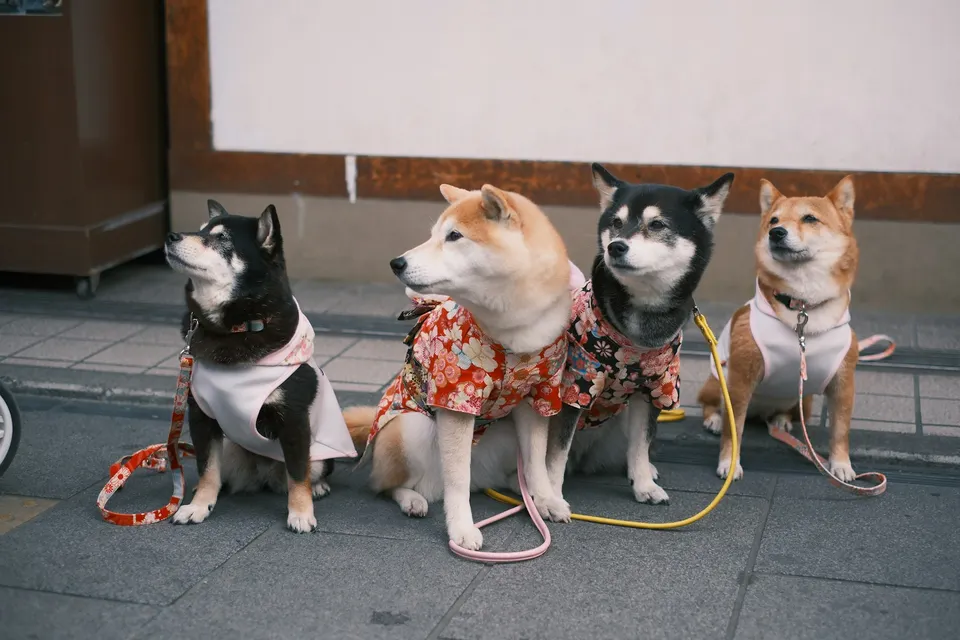
Cover photo: YUNAN WANG on Unsplash. Dogs photographed in Kawagoe, Japan; not evidence of an international trip or entry clearance.
Key official rules and fees checked on 17 September 2026. Recheck the linked authorities before booking, especially for travel in a later year.
For the big picture before you start the Japan checklist, read our guide to flying with your pet from Singapore. It explains the flight options, costs to budget for and who handles each part of the journey.
Pet travel from Singapore to Japan starts with two sets of rules
Singapore is not on Japan's designated-region list. Your pet therefore needs the non-designated preparation pathway even if it has always lived in Singapore. Being healthy, vaccinated or Singapore-born does not replace that sequence.
In the other direction, AVS lists Japan under Schedule II. That creates a possible return without post-arrival quarantine for qualifying personal pets, not an exemption from tests, licences or inspection.
Keep two folders, labelled "Japan entry" and "Singapore return". A document can be relevant to both, but each authority decides whether it meets its conditions.
Before starting appointments, discuss the proposed journey with your vet. Bring the actual flight duration, likely handling arrangements and holiday plan, not just the destination name. A pet who meets border rules may still find repeated transfers or unfamiliar accommodation difficult.
For a dog already distressed by separation, our separation-anxiety guide can help you prepare questions for that discussion. For a cat, think through access to a secure room, familiar litter arrangements and the ability to remain comfortably inside its carrier. A quiet holiday with fewer moves is a different proposition from changing cities every other day.
If you are still deciding where to go, compare Japan with the other routes in our quarantine-free pet travel guide.
The preparation sequence for pet travel from Singapore to Japan
Start with the microchip and existing records
Have the vet scan the chip and compare the number with every vaccination record. The standard route uses an ISO 11784/11785 chip implanted before the first qualifying rabies dose.
MAFF currently does not accept chips beginning 900202. Its separate duplicate-number alert warns that affected animals may need a new chip and repeated preparation; it does not ban every chip beginning 900. Check the actual number with AQS early, rather than assuming readability proves acceptance. AQS identification requirements
Bring old records to the first consultation. You may already have useful preparation, but a clinic receipt saying "rabies vaccine" is not the same as a complete, identifiable record. Ask the vet to identify missing dates, product details and proof of chip implantation before scheduling repeat work.
Check both rabies vaccinations
For Japan, the animal must be at least 91 days old at the first qualifying vaccination. The second dose must be at least 30 days later, while the first remains effective. These rules apply to cats as well as dogs. MAFF's import guide
Check the vaccine type too: Japan accepts inactivated (killed) or recombinant/modified rabies vaccines, not live-virus or RNA vaccines. Have the vet confirm the actual product against MAFF's accepted-vaccine rules.
Record the vaccine's duration of immunity, not merely the expiry printed on its packaging. Put any booster due date into the same calendar as the trip. Your vet should choose the appropriate vaccine and schedule; do not add injections just to imitate someone else's itinerary.
Choose the laboratory before collecting blood
Japan requires a result of at least 0.5 IU/ml from a MAFF-designated laboratory. Check the laboratory that will actually analyse the sample, not only the clinic collecting it.
Japan permits sampling after the second vaccination, including on that same day. However, a sample planned for the Singapore return needs a separate timing check. AVS requires it at least 28 days after the primary vaccination or last rabies booster, and 90 days to 12 months before export back to Singapore. AVS Schedule II conditions
For a shared-test plan, leave at least 28 days after the second dose before sampling, then count Japan's 180 days from that later sample. Alternatively, arrange separate qualifying tests. Ask the vet to document the dates and laboratory acceptance for each country; MAFF approval does not automatically mean AVS approval.
Protect the waiting period
Japan counts sampling day as day zero. The 180 days run from the qualifying blood draw, not the day the report arrives. The report remains valid for two years for Japan, but vaccination must also remain valid. AQS waiting-period rules
Use the waiting months to settle travel arrangements and carrier familiarity. They are not six months during which nothing can be organised. A late result, failed test or lapse in vaccination can change the plan; keep bookings flexible until the records support your dates.
A worked calendar: why six months is not a safe promise
The following is a planning illustration, not an approved itinerary. It assumes an animal at least 91 days old at its first dose, a chip recorded before vaccination, two accepted doses, uninterrupted vaccine validity and a successful report accepted for both countries. There are no additional countries visited or later boosters affecting the sample assessment.
The later sample deliberately leaves 28 days after the second dose, rather than using Japan's same-day option. The vet still needs to confirm that the complete record satisfies AVS.
This is roughly eight months from the first appointment to arrival. A pet with existing qualifying records may need less new preparation; a young animal or one needing repeat work may need more. Japan's waiting period alone is about six months after sampling; starting the combined preparation from scratch needs additional time before that clock begins.
The return sample would be 199 days old on 15 June. That falls inside the numerical 90-day-to-12-month window, but the calculation alone does not validate the laboratory, vaccine history, ownership or documents.
The clocks can therefore overlap: you do not necessarily add another 90 days after the Japan holiday. Equally, you cannot assume every Japan-valid test works for Singapore. Have the vet check the proposed return date as well as the outward arrival.
Use calendar-day arithmetic rather than calling every six-month period "180 days". The example uses rules checked in September 2026; dates in 2027 require another check before booking.
Arrange Japan entry and Singapore departure
Submit the 40-day notification during the wait
Notify AQS at the intended Japanese entry port at least 40 days before arrival. The process produces an Approval of Import Inspection of Animals; it is separate from your Singapore export licence. MAFF's notification instructions
Do this early enough to fix questions about the records. Keep the approval with the itinerary and tell AQS about changes using its amendment process. Moving a flight earlier is not just an airline decision.
Dogs must use designated entry ports; Narita, Haneda, Kansai and Chubu are among them. Cats entering through another port require advance consultation with AQS. Check the official port list, particularly if considering an unusual route.
Obtain the export licence and endorsed certificate
Singapore requires an export licence even for a holiday. It is valid for 90 days, so applying when the first vaccination happens would be too early for the example above. Normal personal-licence service costs SGD 50; express service costs SGD 100. AVS export process
Use Japan's Form AC with the vet. It brings the chip, vaccinations, blood-test result and clinical findings into one certificate. The pre-export examination must be within ten days before boarding; dogs also need the specified leptospirosis clinical assessment.
A private vet's signature is not the whole process. AVS's manual endorsement service requires the completed destination template and original supporting records, with a two-working-day service standard and no express option. Check its current submission instructions before arranging the final appointment.
Carry a usable arrival pack
Keep originals accessible, with digital backups stored separately. The working pack should include the AQS approval, government-endorsed certificate, rabies records, laboratory report, microchip record and Singapore export licence, plus any airline or cargo documents requested.
At Japan arrival, all preparations still face official inspection. The compliant framework is within 12 hours, not a compulsory 12-hour stay. AQS says inspection usually takes less than an hour in those cases, while cargo handling and the wider airport process can take longer. AQS inspection FAQ
Leave the first afternoon light rather than booking a tight onward connection. Keep the import quarantine certificate issued on arrival: you will need it for the export arrangements.
Make the holiday work for your pet
Check the flight and the train separately
Get the operating airline's acceptance for the exact pet, carrier, flight and direction before buying a non-refundable ticket. Ask whether transport is in-cabin, checked baggage or manifested cargo, and how handover works. A carrier's general pet policy is not confirmation of space on your flight.
The same applies to ground transport. Under JR Central's pet rules, eligible small pets must stay inside a case measuring no more than 120 cm in total length, width and height, with pet and case together within 10 kg. The charge is JPY 290 per case. Handles and wheels count towards the limits.
A 9 kg dog in a 2 kg carrier is therefore outside that weight allowance. A larger dog being admitted to Japan does not make it Shinkansen-compatible. Check the operator for each rail leg and arrange suitable alternatives where needed.
For shared or whole-aircraft alternatives, our private pet flights guide explains the provider and quotation checks. The Japan entry process still needs its own assessment.
Book accommodation around the actual animal
Ask accommodation providers about species, weight, number of animals, permitted rooms and whether the pet may be left alone. "Pet-friendly" is not enough detail to plan a full day out.
Map airport transfers, the return vet appointment and AQS inspection before filling the itinerary with sightseeing. Staying near the same departure airport for the final nights can reduce the chance of a long cross-country trip colliding with certification appointments.
Plan suitable food, cleaning supplies and access to your pet's records for a local vet. Decide who stays with the animal if one person needs to collect documents. These small practical choices matter more than adding another destination.
For dogs, AQS also directs importers to municipal registration within 30 days. Ask the relevant municipality how that instruction applies to your stay; do not assume a short holiday creates an exemption. MAFF's post-import instructions
Build the Singapore return checklist before you leave
Establish Schedule II eligibility
A direct return with your own established pet is different from bringing home a newly purchased or adopted animal. The Schedule II certificate includes a residence option for pets previously imported directly from Singapore. It does not automatically require a six-month holiday in Japan.
Owner travel timing and ownership history affect quarantine eligibility. Under the formal conditions, a personal pet arriving outside five days of its owner's movement, or imported for a transfer of ownership, faces at least ten days of home quarantine. The ownership provision includes specified recently acquired overseas pets.
The AVS overview uses different wording: less than five days and six months at the same address. Plan to return together and retain ownership and address records. For an exact five-day gap, recent move, adoption or additional countries, obtain AVS confirmation before relying on no quarantine.
Our Singapore pet-import overview provides wider arrival context; use the linked current AVS conditions for the rules governing your trip.
Arrange the Japanese vet and government certification
Apply to Japan AQS for export inspection at least 14 days before the desired inspection date. For a two-week holiday, that means organising the application before, or around, the outward journey rather than starting it on the final weekend. For example, a desired inspection on 12 June needs an application by 29 May, before the illustrated 1 June arrival. AQS schedules inspection and issues an English export quarantine certificate. Japan export procedure
Before leaving Singapore, send the chosen AQS office the current AVS template and ask how the required Singapore certification will be completed. Arrange the Japanese vet for treatments and supporting records. Agree who completes the clinical sections and who provides the official government endorsement in Section IV of the AVS template. Do not assume any nearby clinic can finish everything alone.
Japan normally examines within ten days before departure unless the destination requires otherwise. Singapore's conditions are tighter: the relevant examination/certificate uses a seven-day window, with internal and external parasite treatments two to seven days before export. The species-specific core vaccinations must follow the manufacturer's recommendations and be given at least two weeks before export, not merely be unexpired. Check these records before leaving Singapore, rather than discovering a missing course during the holiday. Schedule II veterinary conditions
The AQS departure FAQ explains the relationship between veterinary treatment records and government export certification. Check that the final packet answers Singapore's requirements, rather than assuming the Japanese document title alone is sufficient.
Set up Singapore clearance
Obtain the return import licence and ensure the pet's Singapore licensing records are in order. Coordinate the airline declaration and book the border inspection at least five working days before arrival, following Section VIII of the formal Schedule II conditions. Allow for Singapore public holidays in that calculation.
Since 1 April 2026, an AVS-recognised pet agent must handle import clearance at CAPQ, including personal pets arriving through Changi. This does not automatically require a full international relocation package. A rigid crate is required for the transfer, and arrivals outside operating hours can be held until the next working day. CAPQ is closed on weekends and public holidays. CAPQ procedures
Ask the clearance agent to check your flight time before paying for it. A technically quarantine-free pet can still face an avoidable airport holding period.
Finally, apply for any eligible Customs GST relief for the same returning pet at least five working days before arrival. Relief is not automatic; retain ownership, licence and travel evidence, and follow the permit instructions if it is not granted.
Budget for the whole journey
The government fees are only a small part of the budget. AVS lists SGD 50 normal or SGD 100 express for each personal export/import licence. Japan's AQS import inspection is free, but transport, private services and any detention-related care are not. AVS licence fees, AQS costs
Request separate prices for:
- Singapore consultations, vaccinations, sampling, laboratory analysis and courier charges.
- Health certificates, endorsement and any document-handling service.
- Both flights, crate and airport handling.
- Japanese veterinary appointments and transport to export inspection.
- Singapore arrival clearance and delivery.
- Accommodation charges, local pet transport and a changes contingency.
Two normal-service personal licences total SGD 100, not the cost of the trip. Keep quotations in their original currencies until comparing them using a dated exchange rate; do not read a JPY charge as SGD.
Our pet relocation-agent comparison can help you compare service scope. Ask each candidate which tasks you still own, who books the Japanese appointments and whether the quotation includes return clearance. A cheap outward-only quote is not directly comparable with an end-to-end return plan.
Frequently asked questions
Do cats need the same 180-day preparation as dogs?
Yes. The core Japanese microchip, rabies vaccination, serology and waiting sequence covers both. Cats are not exempt because they live indoors. Some port and clinical details differ, so complete the species-appropriate records rather than copying a dog's paperwork.
Does a high titre remove Japan's 180-day wait?
No. Passing the threshold does not replace the separate wait. Arriving early can mean detention for the unfinished period. Plan around the qualifying sample date and confirm the arrival date with AQS, rather than treating a high result as permission to fly sooner.
Can one blood test cover Japan entry and Singapore return?
Potentially, but only when the report meets both authorities' requirements. Check vaccination-to-sampling timing, laboratory acceptance, identity and validity on the return export date. Japan's same-day second-dose sample does not meet the ordinary AVS timing of at least 28 days after the last booster. Plan a shared sample at least 28 days after the second dose, or use separate qualifying tests. The worked calendar takes the shared-sample approach without assuming laboratory acceptance.
Can I take a young puppy or kitten?
Japan's minimum first-dose age plus the shortest dose interval and waiting period gives a theoretical 301-day sequence: 91 + 30 + 180. That is arithmetic for the basic Japan pathway, not a travel recommendation or a complete return plan. Allow more time where the animal's records or welfare require it.
Can my pet travel in the cabin?
That depends on the operating airline and exact itinerary, not just Japanese import eligibility. Ask for written acceptance covering both directions, the animal and the carrier. Do not book around a general claim that all pets, or all small pets, can travel in-cabin.
Is a short Japan holiday worth this preparation?
It can be, particularly when records are already in place and the holiday suits the animal. Compare the full workload with care at home, not only the flight fare. You should be comfortable with the return appointments, transport limitations and quiet time your pet will need.
Choose the travel window before the ticket
The useful first booking is a records-review appointment, not a non-refundable flight. Take your pet's chip and vaccine history, proposed Japan dates and intended return date, then build one calendar with two clearly labelled sets of requirements.
Once the sample, validity windows and certification arrangements are settled, the holiday becomes much easier to plan. Keep room for changes, and choose an itinerary that works for your dog or cat as well as for you.
Considering a European holiday instead? Our Singapore-to-France pet travel guide sets out that route's different entry and return preparations.